
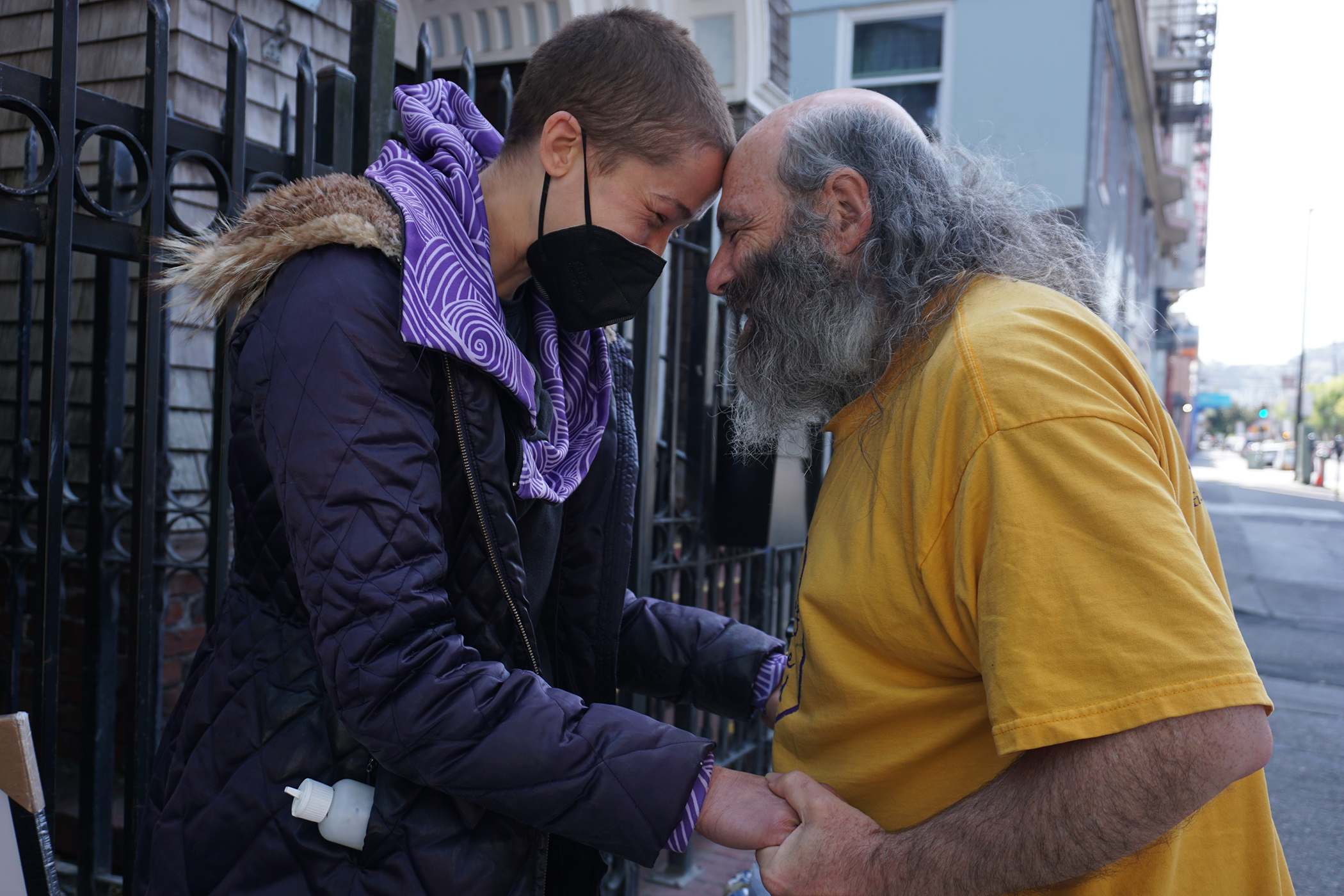
Care Is Stronger Together
Care Through Touch Institute works alongside community organizations to bring consistent, trauma-informed massage to people experiencing homelessness, illness, trauma, and isolation.
By embedding our services within trusted settings, we help make compassionate touch part of a broader approach to whole-person care.
Who we serve
Accessible Care for People Facing Barriers to Support
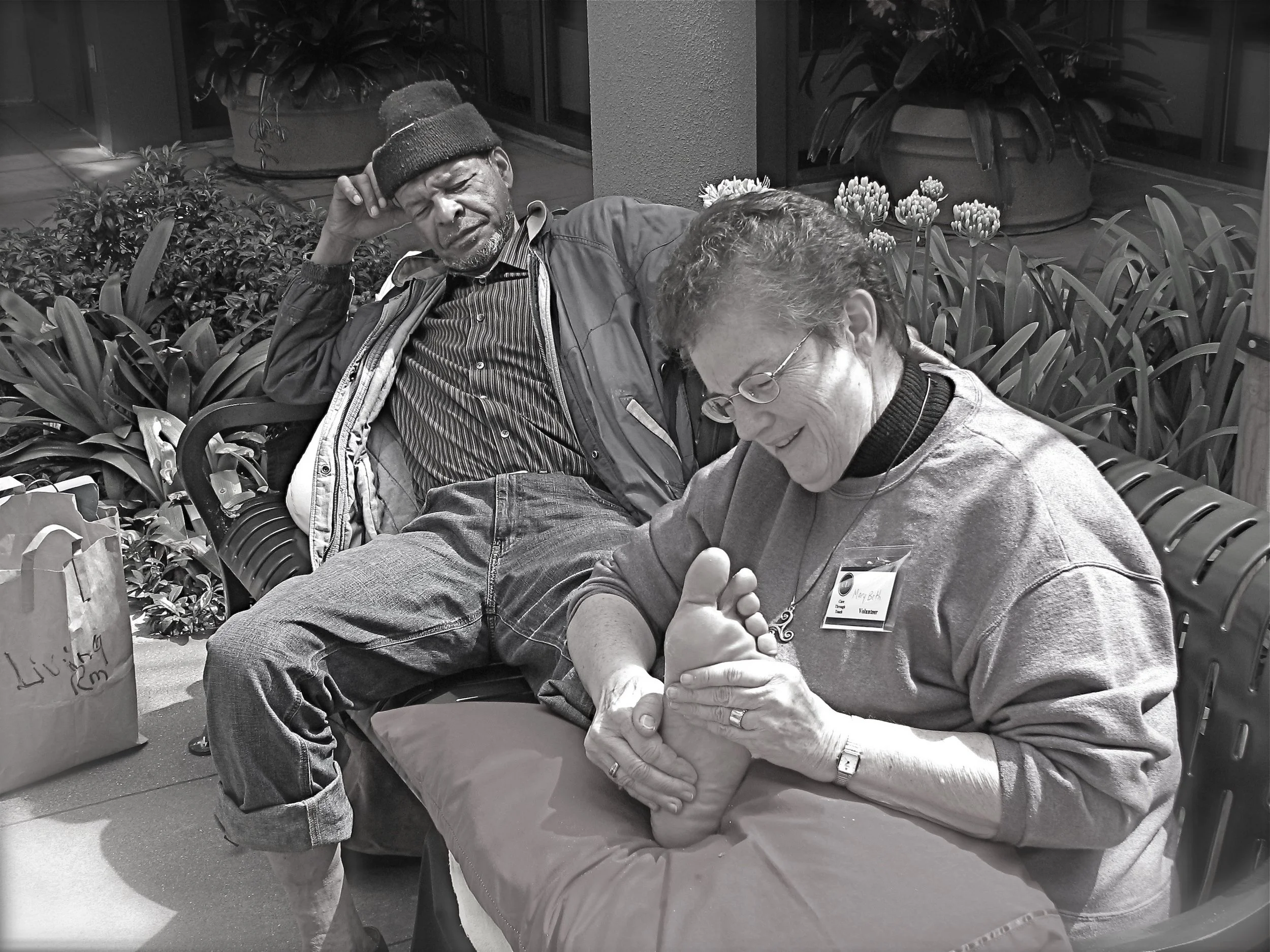
CTI serves people across San Francisco who face barriers to healthcare and other supportive services. This includes people experiencing homelessness or housing insecurity, older adults, people living with chronic illness or pain, people navigating recovery, and individuals experiencing trauma or extreme isolation.
Many clients face several challenges at once. Our model offers an accessible form of care that recognizes their dignity and responds to their immediate need for comfort and connection.
How partnerships work
Bringing Compassionate Care Into Trusted Community Settings
CTI collaborates with shelters, clinics, drop-in centers, hospice and medical respite programs, harm-reduction programs, and other community organizations.
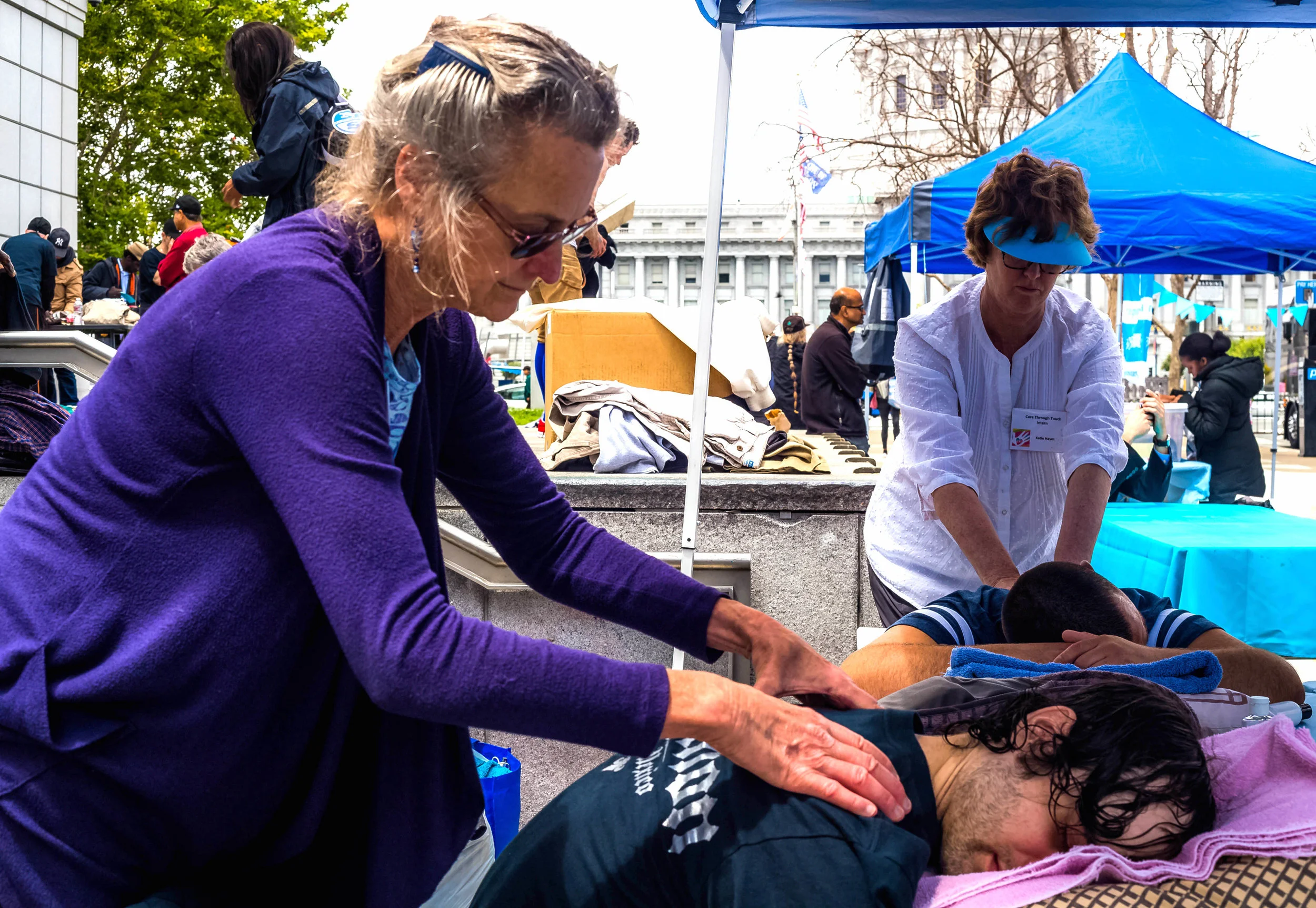
We coordinate with each partner to understand the needs of its community, establish an appropriate service schedule, and integrate massage into the setting's existing services.
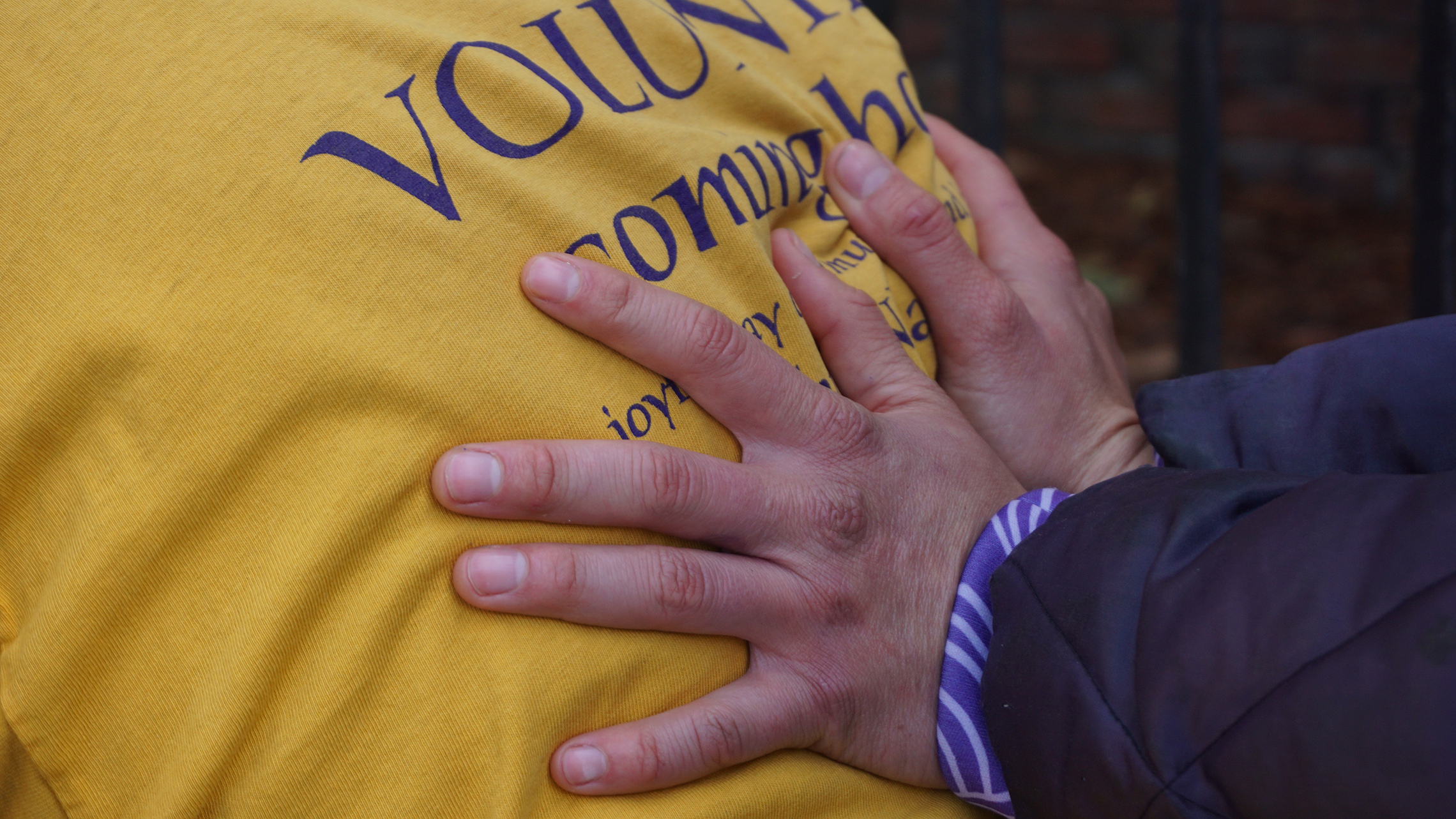
Our practitioners provide free, clothed chair massage in a respectful and welcoming environment. By returning consistently, we become a familiar presence within the community and support relationships that develop over time.
An integrated part of community care
Complementing Essential Services Through Touch and Connection
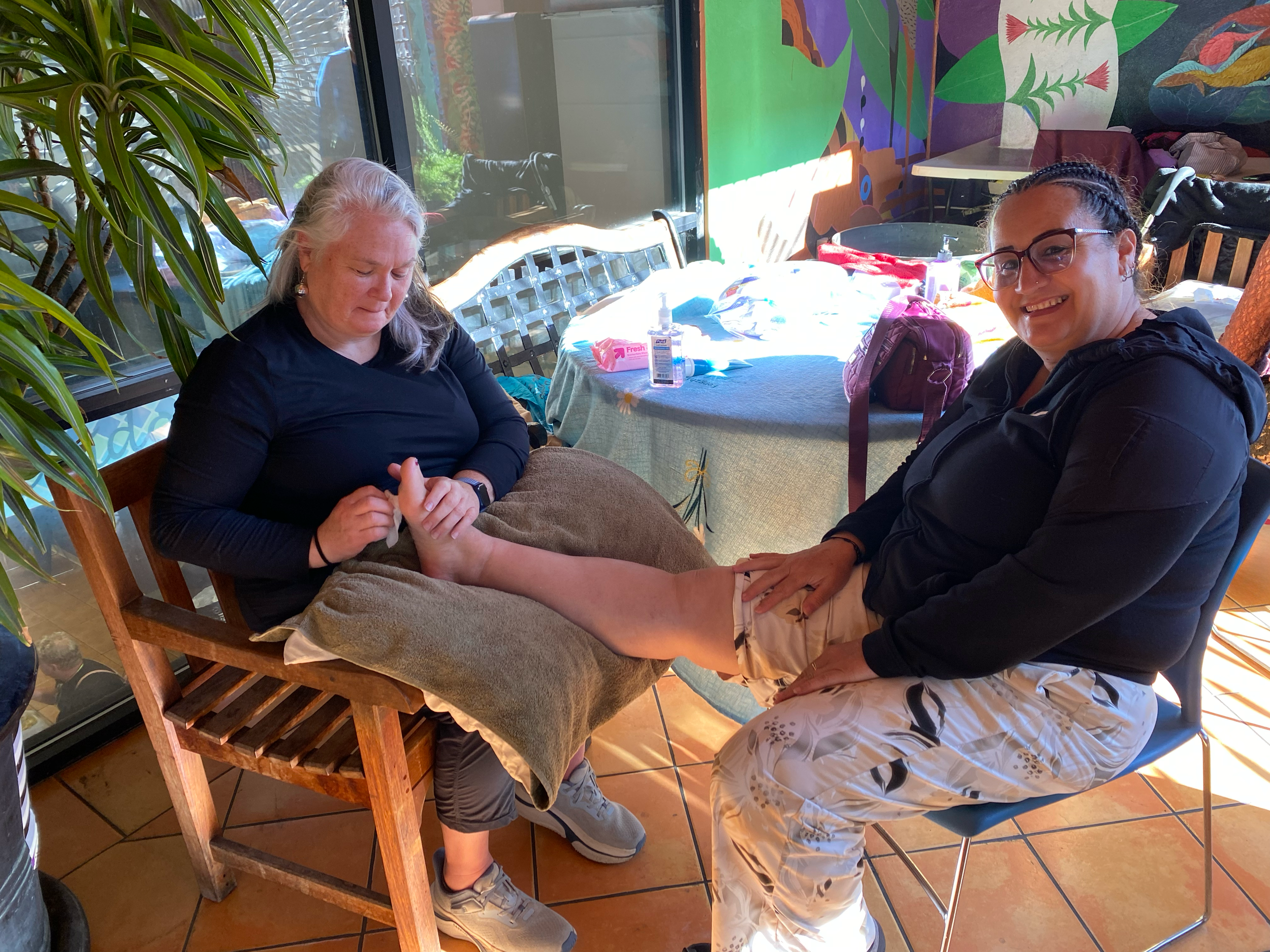
Massage is not a replacement for medical treatment, behavioral healthcare, housing assistance, or recovery services. It is a complementary form of care that can offer physical relief, emotional grounding, and human connection.
Our partners provide essential services. CTI contributes a focused moment of compassionate touch, helping people feel welcomed and cared for within the broader network of support.
What our partners say
-
People regularly share that this care offers them a moment of peace, grounding, and human connection that is otherwise rare in their lives.
Martin de Porres House of Hospitality -
Care Through Touch has been an integral part of Ladies Night, offering seated massage therapy for our clients each week—a core and cherished part of the program.
Mission Neighborhood Resource Center -
Our residents deserve access not only to medical treatment, but also to services that support their physical comfort, emotional well-being, dignity, and sense of connection.
Maitri Compassionate Care
Our Community Partners
CTI's partnerships connect our practitioners with communities across San Francisco.
-
The Harm Reduction Therapy Center (HRTC) serves some of San Francisco’s most vulnerable residents across multiple neighborhoods, including SoMa, the Mission, and Bayview. Through therapy, harm reduction supplies and education, and meals, HRTC reaches people who are unhoused or living in single-room occupancy hotels, immigrants and non-English speakers, formerly incarcerated individuals, and people navigating substance use, isolation, and severe mental health challenges.
CTI has partnered with HRTC for over 20 years, providing weekly, trauma-informed massage at three sites alongside HRTC social workers.
Over two decades, CTI’s presence at these sites has become a reliable and deeply valued part of HRTC’s programming. Clients return regularly for support with chronic pain, stress, and recovery-related tension. These consistent weekly visits have allowed genuine relationships to develop, building the trust that makes care possible for people who may be guarded or hesitant to engage with new services.
The HRTC sites also serve as some of CTI’s primary training locations for new volunteers. The outdoor and street-based settings reflect the realities of community care, while new therapists are supported by experienced CTI practitioners and HRTC social workers as they develop the skills, adaptability, and confidence needed to work effectively in the field.
-
Hospitality House is a long-standing community provider operating two Self-Help Centers in San Francisco’s Tenderloin and SoMa neighborhoods. Working within a harm reduction framework, Hospitality House supports people navigating substance use, mental health challenges, and chronic instability, with a particular focus on people who are unhoused or precariously housed.
CTI has partnered with Hospitality House since the late 1990s, providing weekly massage shifts at both the Tenderloin Self-Help Center and the Sixth Street Self-Help Center. Sessions are offered indoors in spaces that provide privacy and safety. CTI has maintained a consistent presence at Tenderloin Self-Help for over 25 years and at Sixth Street Self-Help since it opened in 2010, building deep, trusted relationships with staff and participants over time.
The partnership extends beyond direct client services. CTI also provides massage as part of Hospitality House’s staff wellness efforts and participates in shared training and education. This reflects a reciprocal relationship rooted in shared values around trauma-informed, harm reduction-based care.
-
Larkin Street Youth Services supports young people experiencing homelessness through a broad continuum of services designed to help them move from immediate crisis toward stability and independent adulthood. Its programs include street outreach, drop-in centers, emergency and supportive housing, medical and behavioral health care, case management, education, and employment services.
Larkin Street’s drop-in centers provide young people with a safe place to meet immediate needs, including meals, showers, laundry, hygiene supplies, and a place to rest, while also connecting them with health care, counseling, case management, housing, education, and employment support. Its health and wellness programs take a holistic approach, addressing both physical and behavioral health and incorporating practices such as mindfulness, nutrition, and yoga.
CTI’s massage services complement this continuum by offering trauma-informed, hands-on care within an environment designed to help young people feel safe, supported, and connected. Massage provides an additional way for young people to address physical tension and stress while experiencing attentive, respectful care alongside the medical, behavioral health, and social services available through Larkin Street.
-
Maitri Compassionate Care is a San Francisco sanctuary providing specialized, compassionate care for people living with HIV/AIDS and for transgender, gender-diverse, and intersex people undergoing gender-affirming surgery. Its home-like setting combines clinical care with an emphasis on dignity, belonging, and emotional well-being, serving people who may need hospice, palliative, respite, or short-term restorative care.
Maitri’s care is designed to address the whole person. In addition to 24-hour nursing and medical care, services include mental health and therapy, social work and case management, nutrition, spiritual support, client education, and activities that help residents build community.
CTI’s massage services complement this multidisciplinary approach by offering hands-on, trauma-informed care within a setting where physical comfort and emotional well-being are treated as integral parts of healing. For people recovering from illness, receiving end-of-life or respite care, or recovering from gender-affirming surgery, massage provides an additional opportunity for relaxation, relief, and compassionate human connection alongside the clinical and supportive services provided by Maitri.
-
Martin de Porres House of Hospitality has long served people experiencing poverty and housing instability in San Francisco, offering hot meals, showers, and supportive services to people with nowhere else to turn. Guests include people who are unhoused, living in single-room occupancy hotels, or marginally housed and struggling to meet their basic needs.
CTI has partnered with Martin de Porres since 1999, providing a weekly two-hour massage shift during lunch service. Sessions take place indoors near the entrance to the dining room, with occasional outdoor work in good weather. Here, massage is understood as a form of nourishment alongside the meal, offering support to guests living with chronic pain, stress, trauma, and profound loneliness.
CTI’s presence contributes more than individual relief. The steady, grounded presence of the massage therapist brings a sense of calm to the dining space, helping create an atmosphere of safety and care that extends beyond those receiving sessions. Over more than two decades, CTI has built deep, trusting relationships with Martin de Porres staff and guests, with many individuals returning week after week and year after year.
Martin de Porres also serves as an important training site for new CTI volunteers. Guests represent the wide range of populations CTI serves across the city, including elders, formerly incarcerated individuals, people living with mental health or substance use challenges, sex workers, and people from diverse linguistic and cultural backgrounds. New therapists develop clinical skills, adaptability, and confidence within a calm, welcoming environment grounded in CTI’s trauma-informed model.
-
The Mission Neighborhood Resource Center has served women in San Francisco’s Mission District for over 20 years. Its Ladies Night program, held every Thursday evening, provides female-identifying individuals with a safe, welcoming space centered on health, safety, and community. Services include showers and laundry, hygiene and harm reduction supplies, meals, case management, and access to a primary care clinic.
CTI has been part of Ladies Night for over ten years, providing compassionate touch and care to women who are often navigating significant hardship. For those we serve, being listened to, cared for, and treated with dignity is itself a meaningful form of support.
-
St. Anthony’s is a long-standing San Francisco safety-net organization serving people experiencing homelessness, poverty, and instability in the Tenderloin. Founded in 1950, it provides a comprehensive range of services under one roof, including hot meals, clothing, showers and laundry, case management, medical and behavioral health care, substance use recovery services, technology and employment support, and spaces for rest and respite. Its approach is grounded in dignity, community, and whole-person care.
St. Anthony’s serves as more than a provider of basic necessities. Its Dining Room is also a community space, while its Welcome Center and Resource Center help guests navigate the range of services available within St. Anthony’s and throughout the broader community. The Medical Clinic provides primary, specialty, and behavioral health care, with an emphasis on access and dignity for people who may otherwise face barriers to care.
CTI’s massage services complement this integrated model by offering hands-on, trauma-informed care alongside St. Anthony’s broader health and support services. Massage provides an additional form of physical and emotional support for people navigating chronic stress, pain, homelessness, and other significant challenges, while reinforcing the sense of dignity, welcome, and human connection at the heart of St. Anthony’s approach.
-
Swords to Plowshares is a San Francisco-based organization providing comprehensive, veteran-centered services to veterans experiencing homelessness, housing instability, disability, unemployment, and isolation. Its approach recognizes that these challenges are interconnected and require wraparound support that addresses housing, health, financial stability, and community. The organization serves thousands of Bay Area veterans each year, many of whom are low-income, older adults, or living with disabling conditions.
Through its Veterans Centers and supportive housing programs, Swords to Plowshares provides access to housing assistance, meals, case management, mental health counseling, peer support, wellness activities, and other essential services. Its community spaces offer veterans a place to rest, connect with peers, and access multiple forms of support in one setting.
CTI’s massage services complement this integrated model by providing hands-on, trauma-informed care alongside Swords to Plowshares’ housing, health, and community services. Massage offers veterans an additional opportunity for physical relief, relaxation, and compassionate human connection, while fitting naturally within an environment focused on health, dignity, stability, and rebuilding community.
-
The Gubbio Project offers unhoused and marginally housed individuals a quiet, sacred space to rest during the day at St. John the Evangelist Church in San Francisco’s Mission District. Away from the noise and dangers of the street, guests can sleep, feel safe, and access compassionate support in a welcoming community setting.
CTI has partnered with The Gubbio Project since the early 2000s, providing weekly seated massage inside the church sanctuary and, when weather allows, in the outdoor courtyard.
Over more than two decades, CTI’s consistent presence has made massage an integral part of The Gubbio Project’s care environment. The site also serves as a training location for new CTI volunteers, offering a calm yet real-world setting where they can develop trauma-informed skills while working with diverse communities experiencing significant hardship.
-
The Healing WELL is a San Francisco-based wellness and recovery organization serving people experiencing poverty, homelessness, substance use, and mental and physical health challenges. Its approach is grounded in harm reduction and in treating each person with dignity, compassion, and respect, recognizing that physical, emotional, mental, and spiritual well-being are interconnected.
The Healing WELL offers a range of wellness programs designed to support the whole person, including movement, mindfulness and contemplative practices, creative arts, physical fitness, healthy eating, and social support. Its programming is intended to complement, rather than replace, conventional medical and mental health care while creating a calm and supportive environment for people navigating significant challenges.
CTI’s massage services complement this holistic approach by offering hands-on, trauma-informed care alongside The Healing WELL’s other wellness practices. Massage provides an opportunity for participants to experience relaxation, physical relief, and compassionate human connection in an environment built around harm reduction, dignity, and whole-person care.
-
Tom Waddell Urban Health Center is a San Francisco Department of Public Health clinic serving low-income communities in the Tenderloin District. Many patients are unhoused or formerly unhoused, with high rates of trauma, substance use, and complex mental health needs.
CTI has partnered with Tom Waddell since 1997, beginning with street outreach and later expanding into specialty clinics serving women, transgender patients, and people living with HIV/AIDS. In 2012, CTI was a founding member of the team that launched the Integrative Pain Management Program. Today, CTI practitioners are fully integrated members of the care team, reflecting nearly three decades of collaboration and CTI’s long-standing commitment to bringing trauma-informed touch into public health settings.
All recipients of CTI’s massage services are established clinic patients, most often referred for chronic pain or mental health concerns. Within the Integrative Pain Management Program, massage is recognized as an important non-pharmacological approach to pain management, and referrals continue to grow as clinicians see its impact firsthand.
-
UCSF Women’s Specialty Program advances comprehensive women’s health through clinical care, research, education, leadership, and community partnerships. Established in 1996 as one of the nation’s first Centers of Excellence in Women’s Health, the Center works to improve health and health care for women across the lifespan while addressing disparities in care and historically underexplored areas of women’s health, including mental health and aging.
The Center emphasizes compassionate, coordinated care and recognizes the importance of working in partnership with women and their communities. Its broader work brings together clinical expertise, research, education, and community engagement to promote health and well-being.
CTI’s massage services complement this whole-person approach by providing trauma-informed, hands-on care within a women’s health setting. Massage offers an additional avenue for relaxation, physical comfort, and compassionate connection, complementing the Center’s broader focus on comprehensive care and well-being.







Explore a partnership
If your organization serves people who could benefit from free, trauma-informed massage, we would welcome a conversation.
We can discuss your community's needs, the service setting, scheduling, practitioner availability, and what a sustainable partnership could look like.